Every parent dreams of giving the best start to their child, and why do you want your child to study early childhood education becomes an important question. In Faridabad, many families now focus on early learning. They want their child to grow smart and confident. Early years are very important for growth. A strong start helps in school and later life.
Children learn very fast at a young age. Their brain grows quickly in these years. Good habits and skills start early. This stage builds the base for the future. That is why parents now give importance to early education.
Reasons You Want Your Child to Study Early Childhood Education
Every parent wants their child to do well in life. Early education gives a strong start and builds confidence from a young age. It helps children face new challenges without fear. They feel more comfortable in new places and situations. This support helps them grow step by step. These programs use fun and simple ways to teach. Children learn without stress and enjoy each activity. They stay active and interested in learning. This builds a positive mindset toward school.
Main reasons parents choose these
- Working together makes schools safer for every child. When parents, teachers, and the community stay connected, they can prevent accidents, bullying, and emergencies in a better way. This shared effort supports quick action and better planning. Children feel protected when they see adults working as a team.
- Schools in Faridabad now focus more on school safety programs for parents and community. These programs teach safety rules, emergency steps, and awareness. They help parents understand their role in school safety. Community members also support by keeping areas around schools safe.
- Parents can take active steps to protect their children. They can join workshops, volunteer in school activities, and communicate with teachers. They can also guide children about safety at home and outside. Small efforts from parents create a big impact on safety.
- Strong teamwork helps children grow safely and happily. It builds confidence and reduces fear in children. A safe environment allows children to focus better on studies and activities. This improves their overall development.
- When everyone works together, children feel secure and ready to learn every day. Parents feel relaxed, and teachers can focus on teaching. This shared effort builds a brighter, safer, and more positive future for all children.
What Is Early Childhood Education and Why Is It Important for Your Child?
Early childhood education means learning from age 2 to 8 years. It includes fun and simple activities that help children grow in a natural way. Kids learn while they play, explore, and enjoy daily tasks. This stage builds curiosity and love for learning. It also helps children feel happy and active.
Main parts of early learning include:
- storytelling and rhymes
- basic numbers and letters
- games and creative play
- drawing, coloring, and simple puzzles
- group activities with other children
The importance of early childhood education is very high in a child’s life. It builds strong basic skills like speaking, listening, and thinking. Children also learn discipline and daily habits. Parents can clearly see early childhood education benefits such as better confidence and communication. This strong start helps children do well in school and future learning.
How Does Early Childhood Education Support Your Child’s Brain Development?
A child’s brain grows very fast during the early years. This is the time when children absorb information quickly and learn new skills easily. Simple daily activities like playing, singing, drawing, and storytelling help improve thinking, memory, and creativity. Children explore, ask questions, and try to solve small problems on their own, which strengthens their brain. Early learning also helps children understand the world around them and develop curiosity and focus.
There are many advantages of early learning in child development, such as:
- better memory and focus, which helps them remember lessons and instructions
- strong thinking ability, allowing children to understand ideas and make decisions
- early problem-solving skills, helping them find solutions to simple and complex challenges
- improved language and communication skills, enabling children to express themselves clearly
- enhanced social skills through group activities and interactions with peers
These skills not only help children in school but also in daily life. They become more confident, independent, and capable of handling new situations. Early learning builds a strong and active mind, which lays the foundation for future success. Children who start early are better prepared to learn more advanced skills in later years, showing how early education shapes a child’s future.
Why Is Early Childhood Education Important for Social and Emotional Growth?
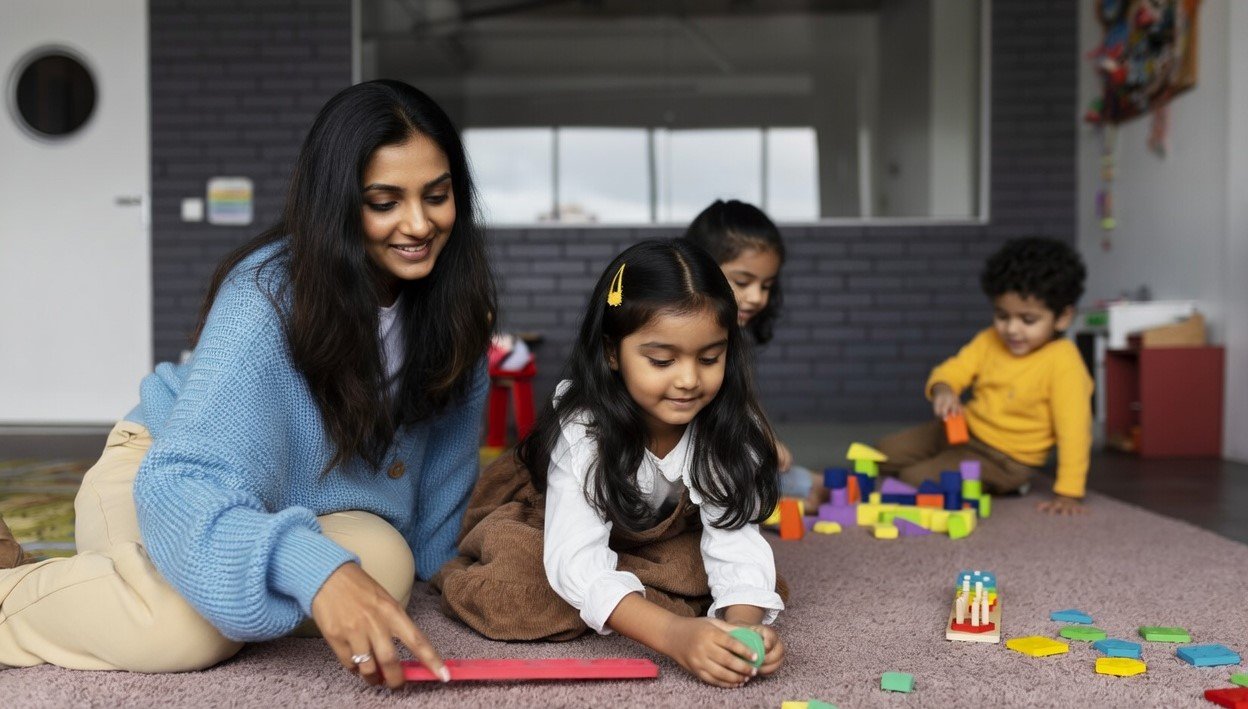
Children need to learn how to behave with others from a young age. Early education provides a safe and structured environment where they can interact with other kids. Through daily activities, playtime, and group tasks, children learn important social skills. They begin to understand how to share, take turns, and cooperate with their peers. These experiences help them develop empathy and respect for others, which are crucial for their overall growth.
Key social skills children learn in early childhood education include:
- making friends and forming positive relationships with peers
- understanding emotions, both their own and others’, to respond appropriately
- learning patience and waiting for their turn during activities
- expressing themselves clearly while listening to others
- working in groups, which improves teamwork and cooperation
It shows the importance of early childhood education in building confidence and independence. Children feel safe, happy, and motivated in group settings. They also develop self-control and problem-solving skills while interacting with others. These social and emotional skills help them adjust easily in school and life, giving them a strong foundation for future learning and success.
How Does Early Childhood Education Prepare Your Child for School Success?
Children who attend early education programs feel more prepared and confident when they start school. They become familiar with simple routines, basic concepts like numbers and letters, and daily activities that teachers expect. This early exposure helps children adapt quickly to new environments, making the transition to formal schooling much smoother. They also learn how to follow instructions, complete tasks, and participate in group activities, which builds independence and responsibility.
This explains why early childhood education programs are important as:
- children adjust quickly in school, feeling comfortable with teachers and classmates
- they feel confident in class, which encourages participation and learning
- they enjoy learning activities, making education a fun and positive experience
- they develop basic problem-solving skills, helping them tackle new challenges
- they build social skills, which helps them interact and cooperate with peers
Teachers also find it easier to guide children who have attended early education programs. These children are more attentive, curious, and ready to learn. This leads to better learning outcomes and stronger academic performance. Early education not only prepares children for school success but also gives them a positive attitude toward learning, which supports long-term growth and achievement.
How Can You Choose the Right Early Childhood Education Program for Your Child?
Choosing the right early childhood education program is one of the most important decisions for your child. A good school provides not only learning but also a safe and happy environment. Parents should personally visit the school, observe classrooms, and see how teachers interact with children. This helps ensure the school meets your child’s needs and feels comfortable for them. A positive and nurturing environment makes learning enjoyable and encourages growth.
Things parents should check when selecting a program:
- safety and cleanliness: Classrooms, play areas, and restrooms should be clean and well-maintained to keep children healthy
- teacher behavior and experience: Teachers should be caring, patient, and trained in early childhood education to guide children properly
- learning method (play-based is best): Programs that focus on play, activities, and exploration help children learn naturally and stay engaged
- group size and individual attention: Smaller classes allow teachers to focus on each child’s needs
- curriculum and daily routine: Check if it balances fun, learning, and skill development
Also, talk to other parents who have experience with the school. Honest reviews and feedback help in better decision-making. A happy, safe, and engaging environment supports better learning and builds a strong foundation for your child’s future. Parents who take the time to choose carefully often see clear early childhood education benefits in their child’s confidence, social skills, and readiness for school.
Simple Tips for Parents
Parents can take small but meaningful steps to support their child’s learning journey. These tips are simple, easy to follow, and can make a big difference in how children develop skills and confidence. Early support helps children enjoy learning, build social skills, and develop a positive attitude toward school. Even small daily actions at home can reinforce what children learn in early childhood education programs.
Helpful tips for parents:
- Start early but do not force your child: Encourage learning through play and fun activities. Let your child explore at their own pace to develop curiosity and confidence.
- Choose nearby schools in Faridabad: Picking a school close to home saves time and reduces stress for both parents and children. It also allows parents to be more involved in school activities.
- Talk to your child daily: Ask about their day, activities, and friends. This strengthens bonding, builds communication skills, and helps parents understand their child’s progress.
- Focus on play-based learning: Learning through play, art, music, and group activities helps children develop creativity, problem-solving skills, and social skills naturally.
- Check your budget before choosing a program: Many affordable early childhood education programs are available in Faridabad. Look for options that balance quality and cost, so your child gets the best start without financial stress.
By following these simple tips, parents can create a supportive learning environment at home and choose the right early childhood education program. These small steps help children gain early childhood education benefits, such as confidence, social skills, and readiness for school, which are crucial for their long-term success.
FAQs
Is early childhood education needed for my child?
Yes, early childhood education is very important for every child. It helps build basic skills like speaking, listening, and problem-solving. Early learning improves memory, attention, and social skills. It allows children to explore, ask questions, and understand the world around them.
What is the right age to start?
Most children start between 2.5 to 4 years, depending on their readiness. Parents should observe their child’s comfort level and interest in learning. Early learning is not about academics; it’s about developing habits, confidence, and curiosity. Starting at the right age ensures children adapt easily to school routines and enjoy learning.
Is it costly in Faridabad?
No, early childhood education in Faridabad is quite affordable. Parents can choose programs that fit their budget while still giving children a strong foundation. Investing in early learning is worth it because it gives children skills, confidence, and readiness for future success.
Can I teach my child at home?
Yes, parents can teach children at home, but formal early education programs have unique benefits. Schools provide social learning, allowing children to interact with peers, share, and work in groups. Combining home learning with school programs gives children the best start and maximizes early childhood education benefits.
Why do parents choose early childhood education programs?
Parents choose early childhood education programs because they see long-term advantages for their children. These programs help children for teamwork, and structured learning. By attending early learning programs, children gain a head start in life, and parents notice improvement in behavior, curiosity, and problem-solving skills.
Conclusion
Every parent wants a bright and successful future for their child. Early learning provides a strong foundation that shapes their growth in the best possible way. It not only builds essential skills like communication, problem-solving, and creativity but also boosts confidence and fosters good habits. Children who start learning early are more curious, independent, and ready to face challenges with a positive attitude.
It’s clear how early education supports your child’s growth and the many advantages it brings for their future. These include better social skills, academic readiness, emotional growth, and overall personality development. Starting early gives children a head start, making them better prepared for school and life.
Parents can take a simple step today to support their child’s growth. Choose the right school in Faridabad that uses play-based learning, focuses on holistic development, and fits your family’s budget. With the right guidance, encouragement, and environment, your child can develop strong skills, confidence, and a lifelong love for learning—setting them up for a bright and successful future.